
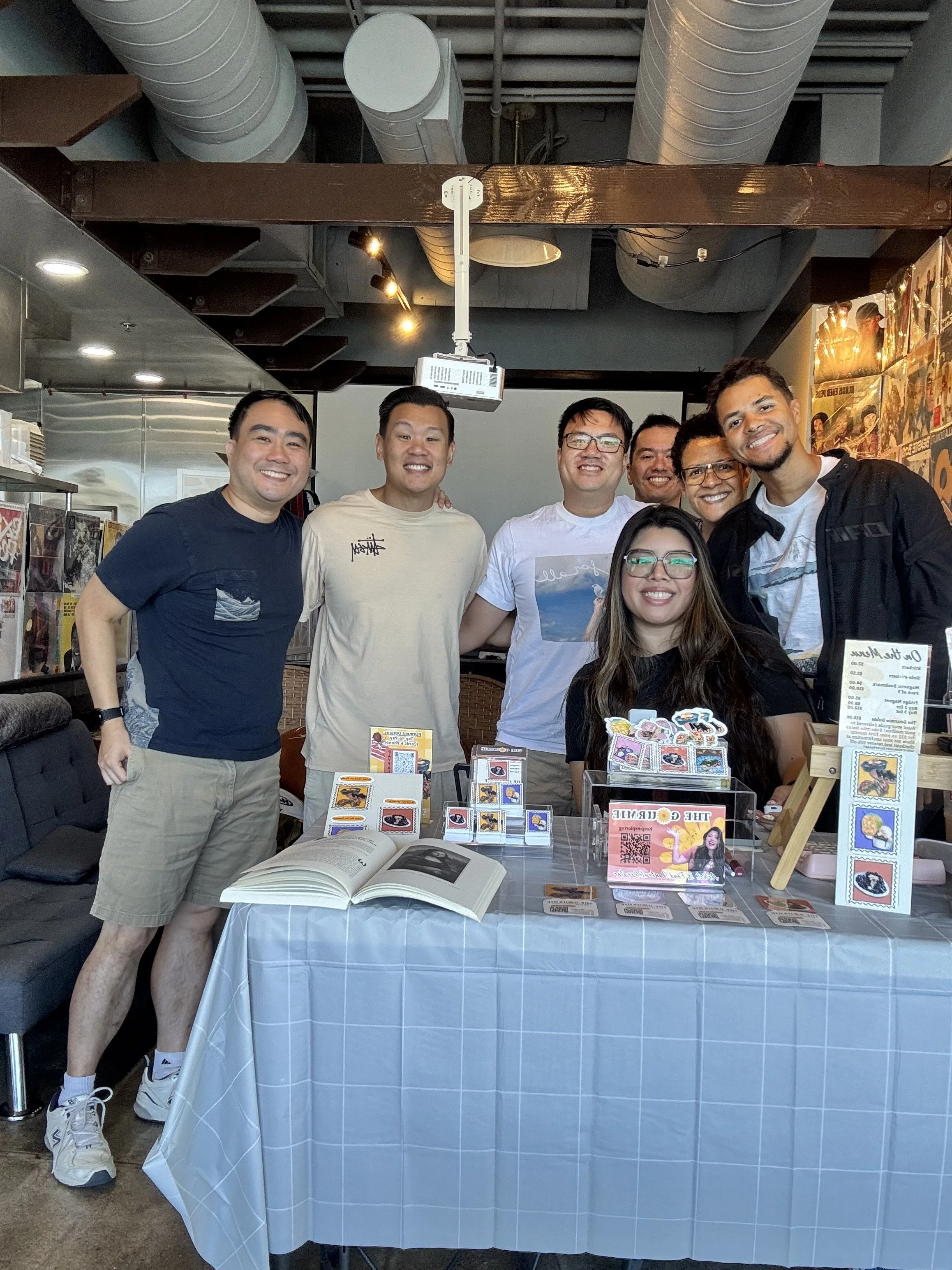
Event 1:
Hosted by Deli Seoul in Costa Mesa, CA
Since starting The Gourmie in September, I've set up my table at four vendor events. If I'm honest, the results were all over the place. One event made me over $500. The other three didn't even reach $50 each.
I want to share both sides, because most vendor stories online skip the quiet parts. Mine had plenty.
Event one: the local deli shop (over $500 in sales)
My first event was at a local deli shop, and it went better than I ever expected. A good chunk of those sales came from friends and regular patrons of the shop, people who already cared about me or already loved the space.
Looking back, I think that's the point. Nobody had to be convinced to stop at my table. The setting was food-centered, the crowd was warm, and my illustrated foodie products made sense in a place where people were already thinking about food.
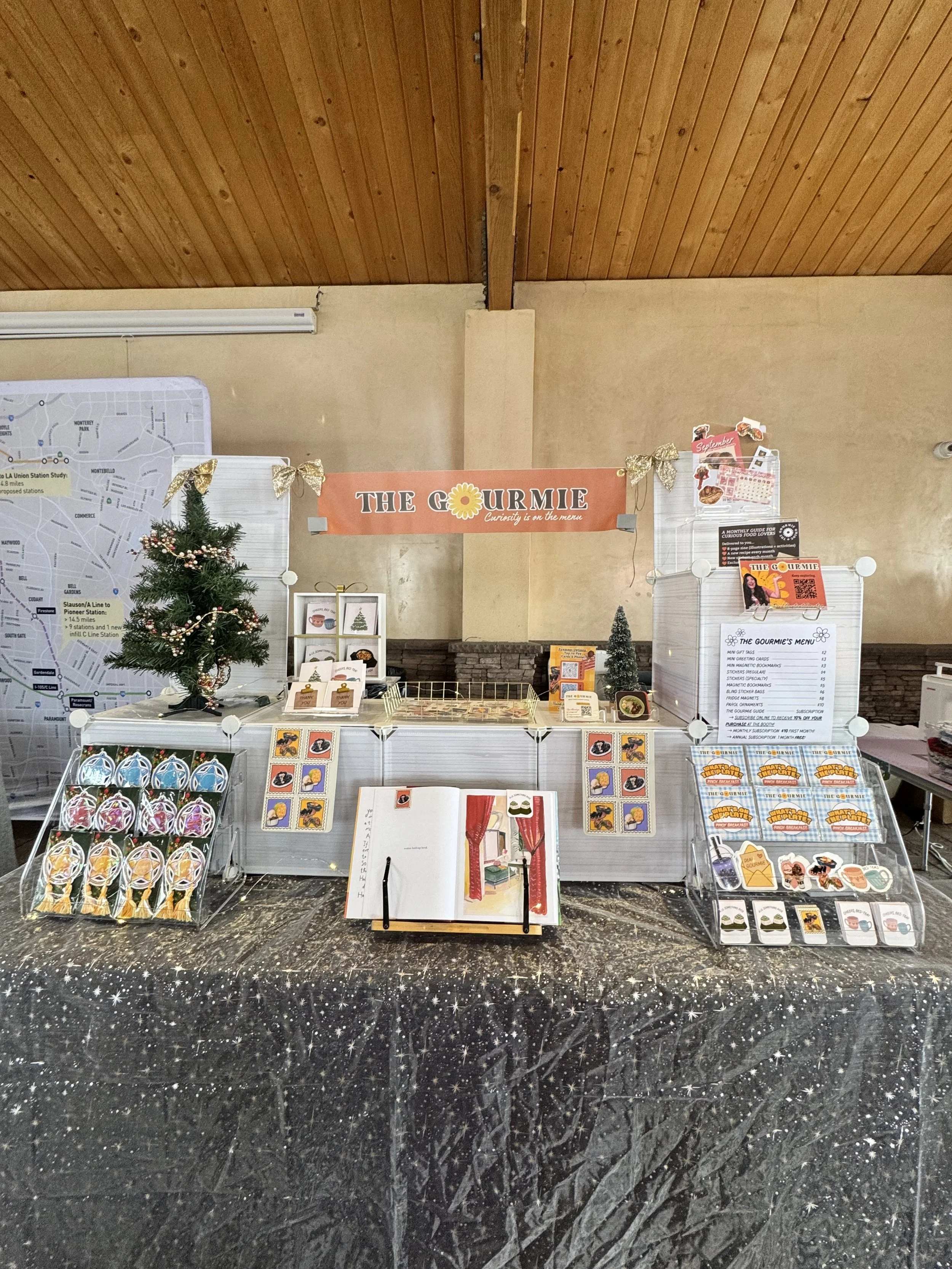
Event 2 & 3 Set Up:
Experimenting with my booth displays
Events two, three, and four: the quiet ones (under $50 each)
The next three were a very different experience. Two of them were Fil-Am community events. I love my community, and I was excited to show up there. But the sales didn't follow, and I had to be honest with myself about why.
I don't think the events were bad, and I don't think my products were bad. I think the fit between who was walking by and what I was selling just wasn't there that day. People came for the food, the performances, and the gathering, not necessarily to shop for stickers, bookmarks, and art prints.
That stung a little. It also taught me the most.
What I'm learning
Audience comes before booth. A beautiful table can't make up for a crowd that isn't there to buy. Before I apply to an event now, I want to ask who actually attends and why they come.
Not every event is a selling event. Some events are for connection or visibility, and some are for sales. Knowing which one I'm walking into changes how I prepare and how I measure success.
Friends and familiar faces can hide the truth. My first event looked like proof the whole business was working. In reality, a lot of that support came from people who already knew me. It was wonderful, but it wasn't a test of strangers.
Products need to match the moment. I'm paying more attention to whether my products fit the mood and the shopping habits of an event's crowd.
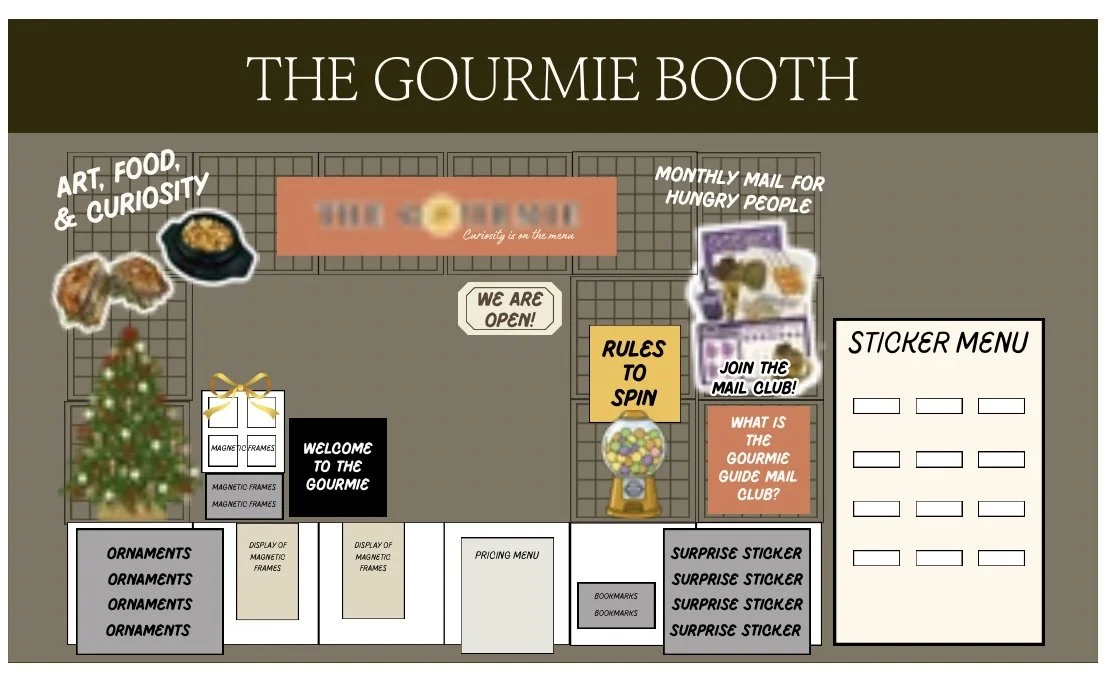
It was hard to build and take down a physical booth, creating this layout on Canva helped me visualize what I had planned.
The win that isn't about sales
Here's the part I'm proudest of. At every event, I tried to improve my display. Each time I changed something: the layout, the signage, how things were arranged.
At my most recent event, my goal wasn't a sales number. It was to hand out more business cards and get my name out there. And that worked. My contact card also served as a free sticker that people were excited to have. More people took the time to choose a design, which means more people now know The Gourmie exists, even if they didn't buy that day.
A business card isn't a sale. But it's a seed. Someone might look me up on Instagram next week, or remember my table when they need a gift.
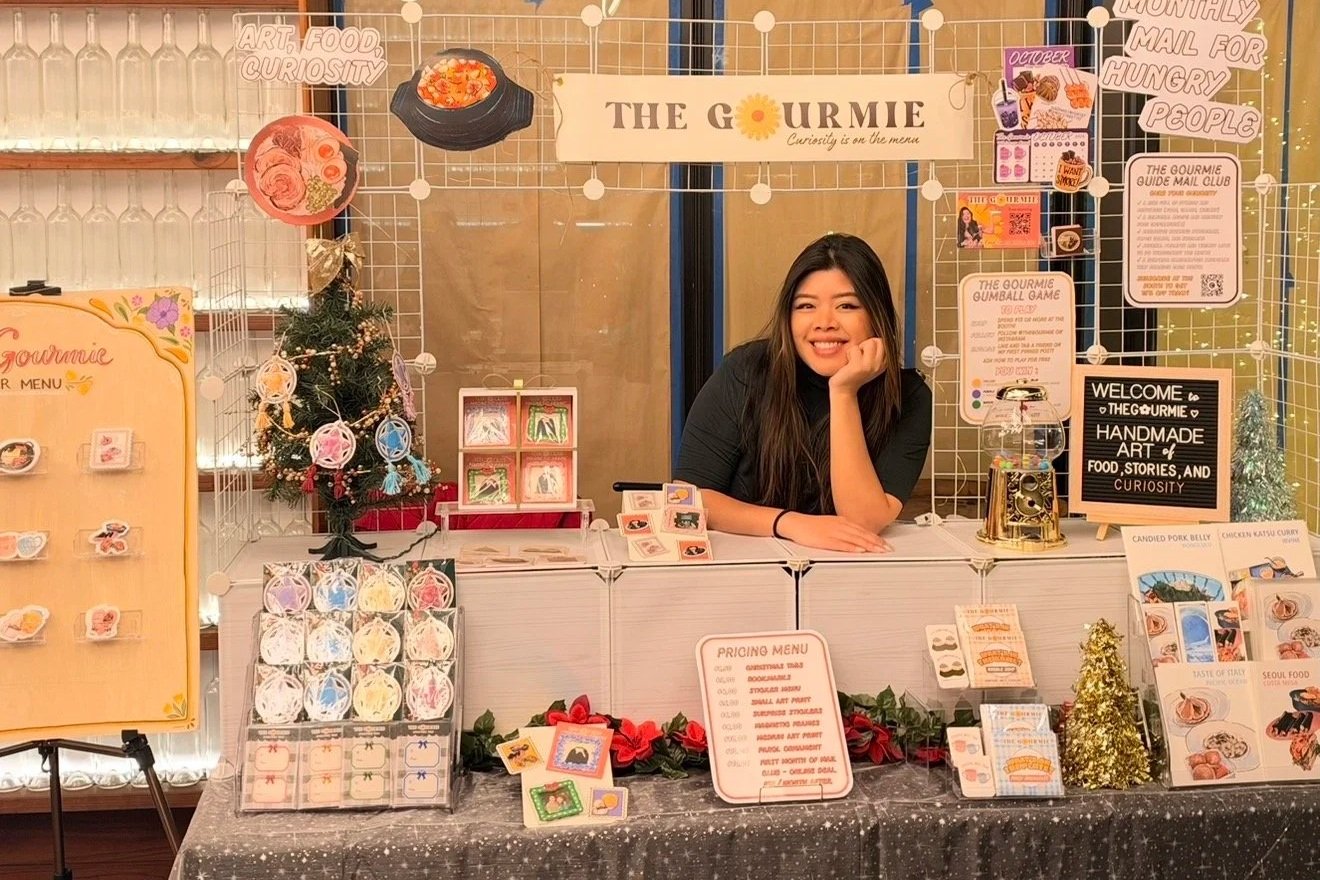
Event 4 - after doing some research and development, I decided to revamp and scale up my modular shelves. People were actually stopping by to check things out which was a goal met for this event.
What's next
I'm going to keep showing up, but with more questions asked up front. Who is the crowd? What's the booth fee compared to the attendance? Is this a sales event or a visibility event? And I'll keep tweaking the display, because every event has shown me something new.
If you're a small business owner doing your first events, I hope this helps you feel less alone in the slow ones. And if you've been to a vendor event that was a flop for you, tell me about it. I'd love to hear what you learned.